DIRECTOR LOCAL QEC’s
LOCAL QUALITY ENHANCEMENT CELLs AT NUST INSTITUTIONS
NUST has a unique structure of having twenty-three teaching institutions as colleges, schools, institutes and centers. These institutions are independent in their working but under academic control of the NUST. In order to effectively implement the QA policies and programs with uniform pace and standard across the university, a Local Quality Enhancement Cells (LQEC) has been established at each constituent institution which functions in collaboration with QAD. Please click here for the overview Responsibilities of NUST Local Quality Enhancement Cells (LQEC). Following are the profiles of the Directors of LQECs:
College of Aeronautical Engineering (CAE), Risalpur
Dr. Ijaz Khan
Director (LQEC)
Department of Avionics Engineering
NUST, Risalpur Campus – (Pakistan)
Off: 0923-631391-7 Ext 7887
Cell: 0330-9337826
e-mail: dlqec.cae@nust.edu.pk
Dr Ijaz Khan holds a PhD (2019) and Master’s (2014) in Electrical Engineering from University Tun Hussein Onn Malaysia, with specialization in Artificial Intelligence, Automated System Design and Image & Video Processing. He earned his Bachelor’s degree in Computer Engineering (2011) from COMSATS Institute of Information Technology, Abbottabad. He received international scholarships from the Research Management Centre (RMC), University Tun Hussein Onn Malaysia, in 2012 and 2015 for his Master’s and PhD studies, respectively. Currently serving as Assistant Professor, Department of Avionics Engineering, CAE–NUST, he teaches and supervises undergraduate and postgraduate research projects. His academic contributions span international journals, conferences, and book chapters, and include several research copyrights and awards in international research and poster competitions. He has served as Industrial Liaison Officer in the Department of Avionics and as Organizing Chair for the 4th International Conference on Digital Futures and Transformative Technologies (ICoDT²) at CAE, NUST. Dr. Ijaz assumed the role of Director, Local Quality Enhancement Cell (LQEC), CAE–NUST, in October 2025.
College of Civil Engineering (MCE), Risalpur
Dr. Rameez Ali Raja
Director (LQEC)
NUST, Risalpur Campus-Pakistan
Off: 0923-631315
Cell: 0328-4112030
e-mail: raraja@mce.nust.edu.pk
Dr. Rameez Ali Raja is Assistant Professor at Military College of Engineering, Risalpur. He holds a Ph.D. degree in Civil Engineering with a major in geotechnical engineering from Purdue University, USA. His research focuses on the effects of soil morphology and relative density on the behavior of shallow foundations using the digital image correlation (DIC) technique. He is a recipient of multiple national and international teaching, research, and publication awards from Higher Education Commission (HEC) Pakistan, Purdue University, and Deep Foundation Institute (DFI). His publication titled “Effect of Footing Geometry and Embedment on the Bearing Capacity and Collapse Mechanism of Shallow Foundations in Sand” published in ASCE Journal of Geotechnical and Geoenvironmental Engineering has been shortlisted for potential consideration for the prestigious ASCE Norman Medal.
In addition to teaching responsibilities, he is also performing duties of Director Local Quality Enhancement Cell (DLEQC) at Military College of Engineering (MCE), Risalpur Campus of National University of Sciences and Technology (NUST) since September 2024.
National Institute of Transportation (NIT), Risalpur

Dr. Muhammad Israr Khan
Director (LQEC)
NUST, Risalpur Campus-Pakistan
Off: 0923-631688
Cell: 0334-1114839
e-mail: m.israr@nit.nust.edu.pk
Dr. Khan is currently serving as Professor (Assistant) at National Institute of Transportation (NIT), National University of Sciences and Technology (NUST), Pakistan. Dr. Khan worked as Postdoctoral Researcher at College of Civil and Transportation Engineering, Shenzhen University, China in session 2023-2026. Dr. Khan completed his Doctorate degree from College of Resources and Civil Engineering, Northeastern University, China in session 2017-2023. Dr. Khan completed his Master’s degree in Geotechnical Engineering from National Institute of Civil Engineering, School of Civil and Environmental Engineering, National University of Sciences and Technology, Islamabad Pakistan in session 2012-2015. Dr. Khan completed his Bachelor’s degree in Civil Engineering from Department of Civil Engineering, University of Engineering & Technology Peshawar Pakistan in session 2006-2010. Research area and interests of Dr. Khan are but not limited to Geotechnical Engineering, Slope Stability Analysis, Landslides, Artificial Intelligence, Machine Learning, Regression Analysis, Dams, Site Investigation and Improvement, Soil and Rock Mechanics, Foundation Engineering, Limit Equilibrium and Finite Element Softwares. In addition to his academic role, he is also the Director of the Local Quality Enhancement Cell (DLQEC), where he oversees quality enhancement, academic audits, and institutional compliance processes. Dr. Israr has contributed to teaching, academic coordination, and student supervision at both undergraduate and postgraduate levels.
College of Electrical & Mechanical Engineering (Coll of E&ME), Rawalpindi
Dr. Ali Hassan
Director (LQEC)
NUST, Rawalpindi Campus. (Pakistan)
Off: 051-54444102
Cell: 0314-5222888
e-mail: alihassan@ceme.nust.edu.pk
Dr Ali Hassan is currently serving as a Professor at NUST College of E&ME. He has been the Head of Department and served at several administrative position since joining NUST in 2012. Currently he has been appointed as DLQEC since March 2023. His research interest include machine learning, signal processing and internet of things. He is performing duties as Director LQEC, for College of Electrical & Mechanical Engineering (CE&ME), NUST.
Military College of Signals (MCS), Rawalpindi
Dr. Saeed Murtaza
Associate Professor
Director (LQEC)
NUST, MCS Campus,
Hamayun Road Rawalpindi – Pakistan
Off: 051-561119/ Ext-3260
Cell: 0333-5142654
e-mail: smurtaza-mcs@nust.edu.pk
Dr. Saeed Murtaza did her Ph.D (1992) in Physics with specialization in Mathematical Modelling and Computer Simulations from the School Physics and Space Research. The University of Birmingham, UK. After doing his PhD, Dr Saeed Murtaza joined a very prestigious Govt. Organization and was actively involved in research of very sensitive nature for six years. He joined NUST in 1998 as Asstt Prof. He was promoted to Assoc Prof in 2000. He Teaches many different Mathematics Course at UG and PG level. He has supervised many UG and PG final Semesters / Degree projects. He is also a member of Guidance and Evaluation Committee (GEC) of many PhD students. His area of interest is Mathematical Modeling and Simulation of Physical processes. He is performing duties as Director LQEC, for Military College of Signals (MCS), Rawalpindi.
Pakistan Navy Engineering College (PNEC), Karachi

Dr. Asghar Razzaqi
Director (LQEC)
NUST, PNS Jahuhar,
Habib Ibrahim Rehmatullah Road, Karachi Campus-Pakistan
Off:: 021-48503035
Cell:0313-2597028
e-mail: qmd@pnec.nust.edu.pk
Dr Asghar Razzaqi PN has done BE Electronics Engineering and MS Communication Engineering from National University of Science and Technology (NUST) in 2008 and 2015, respectively. He has done PhD in Control Sciences and Engineering from Harbin Engineering University (HEU) China in 2022. He joined PNEC-NUST in Aug 2022 as Assistant Professor in Electrical & Power Engineering Department. He has been elevated as Director Quality Assurance at PNEC in Dec 2024. He has also been involved in preparing & delivering college briefs for PEC re-accreditation visits..
School of Electrical Engineering & Computer Science (SEECS), Islamabad
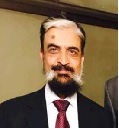
Engr. Taufique-ur-Rehman
Director (LQEC)
NUST, Sector H-12 Campus, Islamabad-Pakistan
Off: 051-9085-2160
Cell: 0332-8544134
e-mail: taufique.rehman@seecs.edu.pk
Engr. Taufique-ur-Rehman is a graduate of College of Aeronautical Engineering and earned his bachelor’s degree from NED University of Engg and Technology Karachi in Avionics Engineering. He did his MS in Software Engineering from NUST, Pakistan in 2004 with the President’s Gold Medal for attaining first position with a cumulative GPA of 3.92 on a scale of 4.0. Through an extended career of more than three decades, he carries a highly diversified experience of serving on a wide variety of assignments. From being Officer-in-charge of the entire Telecommunications Network of Pakistan Aeronautical Complex, Kamra to Director Networks at Air Headquarters Islamabad, he has an extensive experience and significant contributions in the field of ICT, along with teaching at CAE, RCMS and currently in Dept. of Computing at SEECS since September, 2015. In addition to teaching, he is also assigned the additional responsibilities of LQEC, Faculty Sponsor NUST Entrepreneurs Club and also overseeing SEECS Student Affairs and Industrial Liaison Offices. During his previous service, he also been duly acknowledged through various awards conferred upon him at different occasions of his career including, TI (M), awarded on 23 March, 2004 and Professional Excellence Badge (PEB), awarded on 28 July, 1997. He is performing duties as Director LQEC for SEECS, NUST, Islamabad.
School of Mechanical & Manufacturing Engineering (SMME), Islamabad

Dr. Sadaqat Ali
Assistant Professor
Director (LQEC)
NUST, Sector H-12 Campus, Islamabad-Pakistan
Off: 051-9085-6028
Cell: 0333-9410290
e-mail: sadaqat@smme.nust.edu.pk
Dr. Sadaqat Ali obtained his BSc in mechanical engineering from UET, Peshawar, Pakistan, in 2007, his MSc from Malardalens University, Sweden, in 2011 and his PhD in mechanical engineering from Universiti Teknologi PETRONAS, Malaysia, in 2020. His current research includes advanced materials development via additive Manufacturing and Powder Metallurgy for Aerospace and Biomedical Applications. He is currently working as an Assistant Professor at SMME, National University of Sciences & Technology, Islamabad, Pakistan since 20th January, 2020. He has also been appointed as DLQEC, SMME-NUST since 7th January, 2021.
School of Chemical & Materials Engineering (SCME), Islamabad
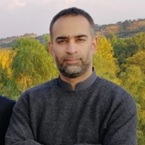
Dr. Malik Adeel Umer
Director (LQEC)
NUST, Sector H-12 Campus, Islamabad-Pakistan
Off: 051-9085-5203
Cell: 0347-0002747
e-mail: umer.adeel@scme.nust.edu.pk
Dr. Malik Adeel Umer has done his Ph.D in 2015 from Korea Advanced Institute of Science and Technology, KAIST, MS in 2010 from Korea Advanced Institute of Science and Technology, KAIST and B.E in 2006 from Ghulam Ishaq Khan Institute, GIKI. He Joined NUST in 2015 as Assistant Professor and was promoted to Associate Professor in Jan 2022.
Dr. Adeel has a vast experience of teaching and academic activities since joining NUST, taught 05 UG and 01 PG courses with full dedication. For all taught courses, student feedback has been above 80%. He served as Focal Person OBE from (2017-2021), ME Department, SCME, as Member of Departmental UG Curriculum Review Committee, as the research coordinator for ME department and Member board of studies for different universities outside of NUST. He is also performing duties of Director Local Quality Enhancement Cell (DLEQC) at the School of Chemical & Materials Engineering (SCME) since September 2024.
School of Civil and Environmental Engineering (SCEE-IESE), Islamabad
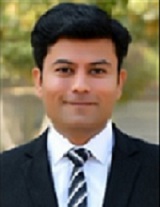
Dr. Musharib Khan
Assistant Professor
Director (LQEC)
NUST, Sector H-12 Campus, Islamabad-Pakistan
Off: 051-9085-4270
Cell: 0301-5559864
e-mail: musharib@iese.nust.edu.pk
Dr. Musharib Khan is currently serving as an Assistant Professor at the Department of Environmental Engineering, Institute of Environmental Sciences and Engineering (IESE), School of Civil and Environmental Engineering (SCEE), NUST, Islamabad. He received his Ph.D. degree in Environmental Engineering from the Hong Kong University of Science and Technology (HKUST), Hong Kong. His research areas include: treatment, management, and valorization of liquid and solid wastes; (nano)materials; and life cycle assessment. He has authored/coauthored twenty-four plus peer reviewed articles in reputable journals including, Water Research, Chemical Engineering Journal, Journal of Hazardous Materials, Science of The Total Environment, and Applied Catalysis B: Environmental and has presented in various national and international conferences. He is recipient of research grants as PI/Co-PI from Pakistan Engineering Council (PEC) and Pakistan Institute of Development Economics (PIDE) in the areas of solid waste management and waste-derived fuels. He is currently performing duties as Director LQEC for SCEE-IESE, NUST, Islamabad.
School of Civil and Environmental Engineering (SCEE-IGIS), Islamabad
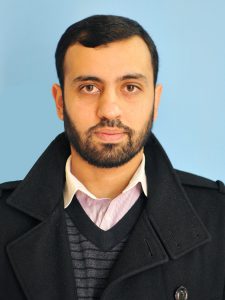
Dr. Muhammad Ali Tahir
Assistant Porfessor
Director (LQEC)
NUST, Sector H-12 Campus, Islamabad-Pakistan
Off: 051- 9085-4476
Cell: 0322-5020145
e-mail: ali.tahir@igis.nust.edu.pk
Dr. Ali Tahir received his B.Sc. (Hons.) degree in Computing and Information Systems in 2004 from Oxford Brookes University and subsequently a Master’s Degree in Geographical Information Science (GIS) from University of Nottingham in 2006. He completed his PhD in Geoinformatics from the School of Computer Science and Informatics at University College Dublin, Ireland. He has also completed his postdoctorate at the Geo-Environmental Research Centre, School of Engineering, Cardiff University. Dr. Ali has won multiple local and international funding’s from various agencies such as Survey of Pakistan, UN FAO, REDD+ MOCC, Higher Education Commission (HEC) Pakistan, Plan International, UN WOMEN, UNICEF, WWF and Conservation Somalia. His research interests include Geoinformatics, Human-Computer Interaction, Geospatial Big Data, Volunteered Geographic Information and Geovisualization. He has been actively working with local and international industry and delivered many R & D solutions for real estate, improved water and sanitation, forest management, air quality monitoring and GIS ERP Integration. He is performing duties as Director LQEC, for School of Civil and Environmental Engineering (SCEE-IGIS), Islamabad.
School of Civil and Environmental Engineering (SCEE-NICE), Islamabad
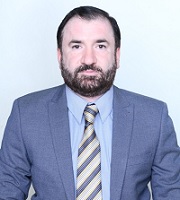
Dr. Muazzam Ghous Sohail
Director (LQEC)
NUST, Sector H-12 Campus, Islamabad-Pakistan
Off: 051-9085-4627
Cell: 0342-0505792
e-mail: mgsohail@nice.nust.edu.pk
Dr. Muazzam Ghous Sohail is an Associate Professor at the NUST Institute of Civil Engineering (NICE), School of Civil and Environmental Engineering (SCEE), NUST, Islamabad. He is a Ph.D. in Materials and Structures from the University of Paul Sabatier, Toulouse, France. His bachelor’s degree is in Civil Engineering from UET, Lahore. His research focuses on durability, resilience, and structural health evaluation of reinforced concrete (RC) structures. He is developing and evaluating innovative and alternative construction materials that could pave the way towards sustainable and durable infrastructures. He has manufactured High and Ultra-High-Performance concrete with 100 MPa and 160 MPa strength, respectively, using locally available materials. In addition, he is working on developing self-healing concrete, which can heal intrinsic cracks and arrest the ingress of aggressive, deleterious agents in concrete. Furthermore, he is studying the mechanical and corrosion behavior of novel reinforcing steels such as high chromium steel (MMFx), epoxy-coated rebars, stainless steel, and other high-strength steel grades. He has published 23 papers in well-reputed journals and has completed several funded research projects. Alongside English, he can speak fluent French and have taught several courses in French at INSA de Toulouse, France. Dr. Muazzam is working as Director Local Quality Enhancement Cell (DLQEC) at NUST Institute of Civil Engineering (NICE), School of Civil and Environmental Engineering (SCEE), National University of Sciences and Technology (NUST), Islamabad with effect from 02 June, 2025.
School of Interdisciplinary Engineering & Science (SINES), Islamabad
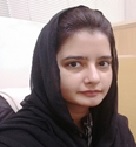
Dr. Rishi Naeem
Director (LQEC)
NUST Sector H-12 Campus, Islamabad – Pakistan
Off: 051-9085-5754
Cell: 0315-1543583 / 0334-7321223
e-mail: rishi.naeem@sines.nust.edu.pk
Dr. Rishi Naeem is a faculty member at the School of Interdisciplinary Engineering & Science (SINES), NUST, Islamabad. She has also served as a permanent faculty member at Ghulam Ishaq Khan Institute of Engineering Sciences and Technology (GIKI), MCS and as a visiting faculty member at the Institute of Space Technology (IST). Her research interests include nonlinear partial differential equations, convex analysis, graph theory, and image analysis. She is the Co-PI of the Image Analysis Lab at SINES. She has completed the Young Scientists Fellowship, sponsored jointly by the British Council and the Higher Education Commission (HEC), in Scotland, UK. She has been a position holder throughout her academic career. Currently, she is performing duties as Director, LQEC, School of Interdisciplinary Engineering & Science (SINES), NUST, Islamabad.
U.S. Pakistan Center for Advance Studies in Energy (USPCAS-E), Islamabad
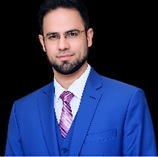
Prof. Dr. Hassan Abdullah Khalid
Associate Professor
Director (LQEC)
NUST, Sector H-12 Campus, Islamabad-Pakistan
Off: 051-9085339
Cell: 0313-5504674
e-mail: hakhalid@uspcase.nust.edu.pk
Prof. Dr. Hassan Abdullah Khalid is currently serving as Professor, Principal Investigator of ECL Lab, NUST EV Research Group Lead, and Director Local Quality Enhancement Cell (DLQEC) at USPCAS-E, NUST. He is a distinguished academic and researcher in the field of Electrical Power Engineering, with expertise in power electronics, renewable energy systems, electric drives, smart grids, and electric vehicles. Dr. Hassan possesses more than a decade of combined academic and industrial experience. He previously served as HOD of Electrical Power Engineering (EPE) at USPCAS-E, where he actively contributed to academic governance, quality assurance, curriculum development, and research supervision at NUST. As DLQEC, he is responsible for facilitating quality assurance, accreditation, and compliance matters in accordance with HEC and NUST policies, while promoting continuous academic and institutional improvement initiatives.
School of Natural Sciences (SNS), Islamabad
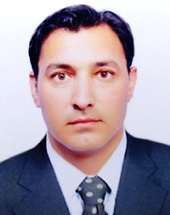
Dr. Rizwan ul Haq
Director (LQEC)
NUST, Sector H-12 Campus, Islamabad-Pakistan
Off: 051-9085-5604
Cell: 0331-5022512
e-mail: dr.rizwanulhaq@sns.nust.edu.pk
Dr. Rizwan Ul Haq is currently working as an Associate Professor in the Department of Mathematics, School of Natural Sciences, National University of Sciences and Technology, Islamabad, Pakistan. He has research experience in Western University, London, Canada where he developed a test for numerical algorithm for fluid over a corrugated surface. His majors are: Computational Fluid Dynamics, Nanofluid, Heat transfer, Boundary layer, Channel and Cavity flow models via numerical and analytical techniques. He is visiting researcher of (i) Tianyuan Mathematical Centre in Northeast China and visiting and (ii) Nanjing university of information science and technology (NUIST), Nanjing, Jiangsu, China. He also has research experience in Moulay Ismail University, Errachedia, Morocco. So far, he has published more than 140 International Scientific Indexing (ISI) publications. The total impact factor is more than 400+ and total citations of entire research work is above 9500+. Dr. Rizwan has been selected as a Top 2% scientist in the world recognized by Stanford University, together with the publishing house Elsevier and SciTech Strategies (2020, 2021 and 2022). He also achieved as a Research Productivity Award and Productive scientist of Pakistan through Pakistan Council for Science and Technology (PCST). Dr. Rizwan also achieved best researcher award of the years 2017, 2018 and 2019 in Bahria University. He is performing duties as Director LQEC, for at School of Natural Sciences (SNS) – NUST, Islamabad.
NUST Business School (NBS), Islamabad
Dr. Ayesha Abrar
Assistant Professor
Director (LQEC)
NUST, Sector H-12 Campus, Islamabad-Pakistan
Off: 051-9085-3207
Cell: 0333-9198141
Fax: 051-9085-3002
e-mail:ayesha.abrar@nbs.nust.edu.pk
Dr. Ayesha is a Ph.D Entrepreneurship of Essex Business School, University of Essex, UK and M.Sc Economics, University of Peshawar. She is specialized in Gender and Entrepreneurship, Entrepreneurial learning and dynamic capabilities, creative industries. She has over 13 years of experience as an academician. She joined NUST business school in July 2018. Prior to that she was attached to Shaheed Benazir Bhutto Women University Peshawar as Assistant Professor. Dr. Ayesha also has teaching experience at Essex Business School and worked as research assistant at International Centre for Entrepreneurship Research (ICER), The Venture Academy at Essex Business School. Currently she is performing duties as DLQEC at NUST Business School (NBS), Islamabad.
School of Social Sciences (S3H), Islamabad
Dr. Muhammad Irfan Malik
Assistant Professor
Director (LQEC)
NUST, Sector H-12 Campus, Islamabad-Pakistan
Off: 051-9085-3557
Cell: 0321-6150274
e-mail: irfanmalik@s3h.nust.edu.pk
Dr. Muhammad Irfan Malik, is a valuable addition to the School of Social Sciences and Humanities at NUST since August 2021. With a decade of diverse experience in administration, research, and teaching, his expertise is truly exceptional. Prior to his role at NUST, Dr. Malik held the position of Assistant Professor at the University of Education Lahore. Furthermore, he served as the Associate Research Fellow and led the Road Sector Development Section at the Punjab Economic Research Institute (PERI), Planning and Development Board, Lahore, under the Government of Punjab. At PERI, Dr. Malik authored a range of impactful research studies covering critical areas such as infrastructure, health, water and sanitation, and education, all of which were published by the institute. Beyond academia and research, Dr. Malik also made significant contributions as a sports administrator within the Government of Punjab, showcasing his versatility and commitment to various facets of public service. He is performing duties as Director LQEC, S3H-NUST since September, 2023.
Atta-ur-Rahman School of Applied Biosciences (ASAB), Islamabad
Dr. Saadia Andleeb
Professor
Director (LQEC)
NUST, Sector H-12 Campus, Islamabad-Pakistan
Off: 051-9085-6133
Cell: 0333-5188343
e-mail: saadia.andleeb@asab.nust.edu.pk
Dr. Saadia Andleeb is working as professor in Atta ur Rahman School of Applied Biosciences. She is a renowned researcher and academic, whose work spans multiple aspects of microbiology, with a particular focus on antimicrobial resistance (AMR) and the molecular mechanisms that underpin the emergence and spread of multidrug-resistant (MDR) pathogens. She has worked in key administrative positions in various capacities in her institute and remained Director LQEC (2014-2017), Head of department of Research (2017-2019) and Head of Department of Industrial Biotechnology (2019-2021). She was one of the pioneer faculty members in establishing the Department of Industrial Biotechnology at NUST in 2012. She has contributed as a key leader for the development of many academic programs in the institute. She has also contributed as mentor to National Outreach program for Faculty by NAHE-HEC and conducted trainings on academic planning in many Universities and as “Effective teaching” module trainer for IPFP faculty at HEC. She is also working as Director Local Quality Enhancement Cell (DLQEC) at Atta-ur-Rahman School of Applied Biosciences (ASAB).
School of Art and Designing Architectures (SADA), Islamabad

Ms. Seema Andleeb Nasir
Director (LQEC)
NUST, Sector H-12 Campus, Islamabad-Pakistan
Off: 051-9085-5442
Cell: 0300-5239983
e-mail: seema.nasir@sada.nust.edu.pk
Ms. Seema Andleeb Nasir is Professor of Practice at School of Art Design and Architecture – SADA, National University of Science & Technology (NUST). She Provide high quality instruction and support to 5th year Students and teach Architectural Design Studio besides working as the main coordinator for the entire course work. Guided the students at SADA during several design competitions where students achieved first position in various Competition. Contributed the role in designing the New Senate Library year 2017 at parliament House Islamabad. Successfully participated and attained First position in the Design Competition Centre for Gender Studies &women Rights, Lahore, November 2017 organized by Higher Education Commission, Islamabad. Successfully achieved Best Teacher award for the academic year 2018-19. Sponsored working paper of various courses at SADA, facilitated SADA in leading various tasks in launching of Master program and proved herself an instrumental in the curriculum development and scheme of studies, besides working at miscellaneous tasks at SADA with greatest motivation and interest in handling administrative work and developing policies in architecture program. Ms Seema is also a practicing Architect and provides Architecture, Interior Design and Construction services and successfully own completion designing of 500+ projects, including residential ,commercial design consultancy along with Turn Key Construction of various residential projects. She is performing duties as Director LQEC, for SADA-NUST.
Center for International Peace and Stability (CIPS), Islamabad
Dr. Shakir Ullah
Assistant Professor
Director (LQEC)
NUST, Sector H-12 Campus, Islamabad-Pakistan
Off: 051-8866776
Cell: 0300-9777822
e-mail: shakir.ullah@cips.nust.edu.pk
Dr. Shakir Ullah holds a PhD in Development Studies with a specialization in Conflict, Peace and Development, from COMSATS University Islamabad. He also pursued coursework at NMBU Norway as part of a student exchange program. Dr Shakir has earned Masters in Anthropology from Quaid-i-Azam University Islamabad and his Bachelor’s degree from GCU Lahore. Prior to joining the Center for International Peace and Stability (CIPS), NUST as an Assistant Professor, he served as a Research Associate at CUI Abbottabad and as a Project Manager at the Higher Education Commission (HEC), Islamabad. He performs duties as Director Local Quality Enhancement Cell (DLQEC) at Center for International Peace and Stability (CIPS), NUST, Islamabad.
.
NUST Baluchistan Campus (NBC), Quetta
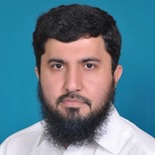
Dr. Muhammad Tahir
Director (LQEC)
NUST Balochistan Campus (NBC), Quetta – Pakistan
Director (LQEC)
Off: 0819085317
Cell: 0333-9167920
e-mail: m.tahir@nbc.nust.edu.pk
Dr. Muhammad Tahir is working as Associate Professor at the Department of Computer Science, National University of Sciences and Technology Balochistan Campus (NBC). Prior to this position, he served as an Associate Professor at the College of Computing and Informatics, Saudi Electronic University, Riyadh, Saudi Arabia. Moreover, he served as Head Department of Computer Science at the City University of Science and Information Technology, Pakistan and Department of Computer Science, National University of Computer and Emerging Sciences.
His research interests lie on Machine Learning and Pattern Recognition, with a particular emphasis on, computer aided diagnostics, bioinformatics, computer vision, and image processing. Dr. Tahir has published more than 28 refereed research papers on these subjects. Dr Muhammad Tahir is currently performing the duties of Director Local Quality Enhancement Cell, NUST Balochistan Campus.
NUST School of Health Sciences (NSHS), Islamabad

Dr. Nadia Nisar
Director (LQEC)
NUST, Sector H-12 Campus, Islamabad-Pakistan
Cell: 0334-5663255
e-mail: nadia.n@nshs.nust.edu.pk
Dr. Nadia Nisar is currently working as Associate Professor in the Department of Community Medicine, NUST School of Health Sciences. She has done her post-graduation in public health (MPH) and is a Ph.D. scholar (Health and Occupational safety 2020-2023) from the University of Kebangsan Malaysia. She has also served as Head of Quality Assurance and Dean of Allied Health Sciences during her career. She is a certified lead auditor and certified trainer for various Quality Standards such as ISO 9001;2015 Quality Management standard and ISO 45001:2018 Occupational Health and Safety standard. Currently, she is performing duties as Director Local Quality Enhancement Cell at School of Health Sciences, National University of Sciences and Technology, Islamabad.
NUST Law School (NLS), Islamabad
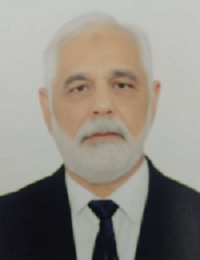
Dr. Syed Mahmood Akhter Hussaom Gardezi SI(M)
Director (LQEC)
NUST, Sector H-12 Campus, Islamabad-Pakistan
Cell: 0334-5334438
e-mail: mgardezi@nls.nust.edu.pk
Dr. Syed Mahmood Akhter Hussain Gardezi, SI(M), is an accomplished academic and international maritime law expert with distinguished experience in military law, maritime security, international humanitarian law and legal affairs. He holds a PhD in Peace & Conflict Studies from the National Defence University, Islamabad, and an LL.M in International Maritime Law with Distinction from the IMO International Maritime Law Institute, Malta. During his distinguished career in Pakistan Navy, he served as Judge Advocate General (Navy), Director Legal at the Directorate of Procurement, and Director Legal at the Maritime Security Agency, Karachi. He has also served as Assistant Professor at the National Defence University and undertaken specialized professional training in international military and operational law in Australia, the United States and Switzerland.
Dr. Gardezi has made notable contributions to maritime legislation, policy and scholarship. His research and publications cover international maritime law, piracy, international humanitarian law and contemporary geopolitical issues. In recognition of his services, he has received the Sitara-i-Imtiaz (Military. He has also been appointed as DLQEC, NUST Law School.
.
Jinnah School of Public Policy and Leadership (JSPPL), Islamabad
Dr. Muhammad Uzair Hashmi
Director (LQEC)
NUST, Sector H-12 Campus, Islamabad-Pakistan
Director (LQEC)
Off: 051-9085 3658
Cell: 0333-5666400
e-mail: uzair.hashmi@jsppl.nust.edu.pk
Dr Muhammad Uzair Hashmi is an Assistant Professor of Governance and Public Policy at the National University of Sciences and Technology (NUST), Pakistan. He holds a PhD in Political Science and Public Administration and an MA in Eurasian Studies from Middle East Technical University (METU), Türkiye, and a Master of Public Administration from Quaid-i-Azam University, Pakistan. He headed the Department of Government and Public Policy from 2023 to 2026 and subsequently assumed the position of Director, Local Quality Enhancement Cell (DLQEC), at the Jinnah School of Public Policy and Leadership (JSPPL). He serves as Member (Acadeemia) for bureaucratic reform with the Prime Minister’s Task Force and as a Subject Specialist in Public Administration for the Punjab Public Service Commission (PPSC). A recipient of the European Commission’s Marie Skłodowska-Curie Actions Seal of Excellence, he maintains active research collaborations with Dublin City University, University College Dublin, the University of Bonn, the German Institute of Development and Sustainability (IDOS), and METU. His research focuses on governance and public policy, public administration reform, securitization and societal security, migration and refugee governance, and social policy. His experience also encompasses academic leadership, policy consultancy, institutional development, international capacity-building projects, and nearly nine years of management in the aviation sector.